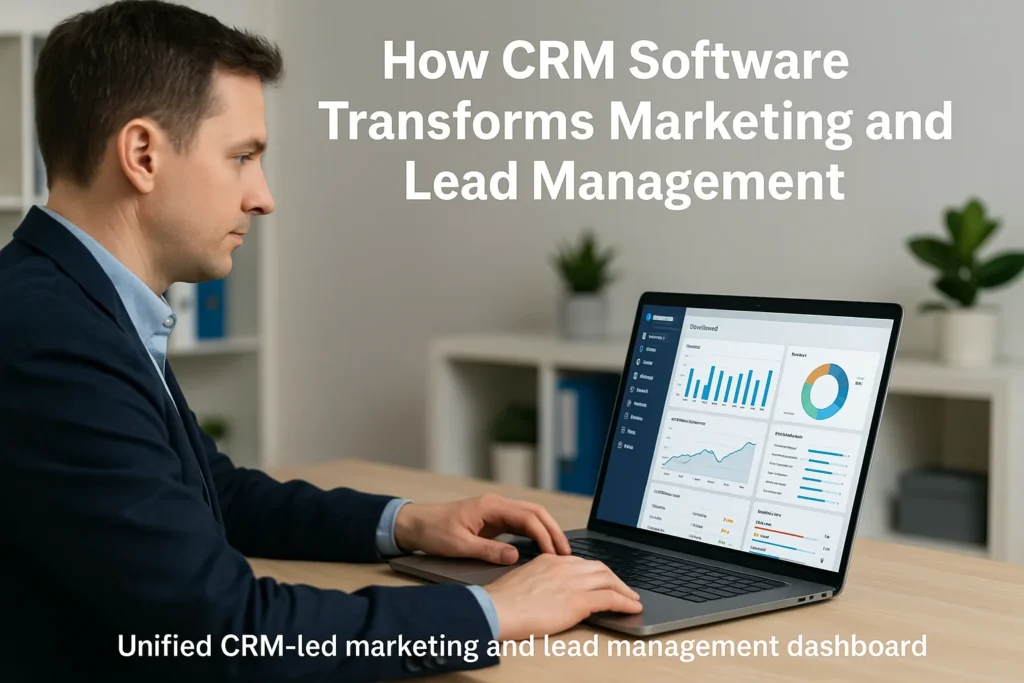

Marketing has become a data sport. Audiences jump between search, social, email, chat, and marketplaces, and they expect the brand to recognize them wherever they land. A modern customer relationship management (CRM) platform centralizes those touchpoints, turning raw interactions into prioritized leads and orchestrated follow-ups. Done right, CRM software becomes the single source of truth that aligns marketing and sales around one shared pipeline.
Yet many teams still run campaigns with disconnected lists, manual spreadsheets, and siloed tools. That creates lead leakage, sluggish response times, and poor visibility into what actually drives revenue. In this guide, we explore how CRM software transforms marketing and lead management—from capture and scoring to routing, nurturing, handoff, and closed-loop reporting—so teams can move faster and convert more.
Why Marketing Teams Outgrow Spreadsheets
Spreadsheets are fine when you have dozens of contacts; they fail when you’re dealing with thousands of weekly visitors, multiple channels, and complex buyer journeys. A CRM stabilizes data quality, enforces process, and gives leaders real-time insight into performance. It replaces ad-hoc exports with governed objects and automation that scale without adding headcount.
- Unified identities: The CRM merges duplicates, stitches anonymous cookies to known contacts, and keeps fields consistent across forms and imports.
- Standard stages: Everyone speaks the same language—Subscriber, MQL, SQL, Opportunity, Customer—so dashboards reflect reality, not opinion.
- Faster handoffs: When a lead becomes sales-ready, routing rules assign it instantly based on territory, product line, or account tier.
- Compliance built-in: Consent, suppression, and regional rules live in the system, protecting deliverability and reputation.
- Auditability: Activities and ownership changes are logged, which simplifies revenue attribution and quarterly reviews.
Beyond convenience, the switch to CRM is a cultural reset. Governance replaces guesswork; processes become teachable; onboarding shortens because people can see how work flows from campaign brief to closed revenue. Stakeholders stop arguing about which spreadsheet is right and begin debating which experiment will move the metric we all share. That creates a durable rhythm: weekly reviews center on outcomes, not anecdotes, and roadmaps align to the same North Star.
Lead Capture, Scoring, and Routing
High-intent leads rarely wait. The closer your response is to the moment of interest, the higher your conversion rate. CRM software streamlines capture by connecting web forms, chatbots, ads, events, and partner referrals directly into the database. From there, scoring and routing the right way prevents both spam and slowdowns.
- Capture: Form handlers validate emails, enrich firmographics, and drop contacts into the correct campaign and source.
- Qualify: Behavioral and demographic points add up—pricing-page visits, webinar attendance, role, industry, tech stack—so only fit and engaged records progress.
- Protect: Bot filters, domain blocklists, and duplication logic keep fake leads from cluttering rep queues.
- Route: Round-robin, geography, or named-account rules send qualified leads to the right owner within seconds.
- Notify: SLAs fire alerts in email, mobile, or Slack when a lead sits untouched or a hot account spikes in activity.
| Stage | Owner | SLA | Recommended Automation |
|---|---|---|---|
| New Lead | Marketing | Immediate | Double-opt-in email; dedupe and enrichment |
| MQL | Marketing | 15 minutes | Notify SDR; create task; add to nurture |
| SQL | Sales (SDR) | 1 hour | Book meeting; update intent fields |
| Opportunity | Sales (AE) | 24 hours | Send proposal; trigger executive sponsor email |
| Closed Won | Success | Same day | Handoff playbook; welcome sequence |
These mechanics are only as good as the feedback loops around them. Mature teams test their gates, measure response times, and tune scoring models monthly. They A/B the “first touch” email versus an immediate call; they adjust weights when markets change; and they publish the definitions of MQL and SQL where everyone can see them. The result is a system that improves with each campaign instead of decaying into chaos.
How CRM Connects with ERP Software for Revenue Teams
When CRM data flows into ERP Software and back, marketing gains financial clarity and operational guardrails. Product availability, pricing tiers, payment status, and renewal dates become segmentation fuel rather than back-office secrets. That means campaigns target accounts that can actually buy, not just those that clicked an ad.
Bidirectional sync unlocks accurate lifecycle reporting: sourced pipeline, influenced revenue, average deal size, and time-to-close by channel. With ERP Software inventory and invoicing context, marketers can suppress out-of-stock promos, prioritize high-margin lines, and coordinate with finance on quarter-end pushes without surprise backorders.
Critically, integration is not an all-or-nothing big bang. Start with a thin slice—such as customer status and product category—then widen the bridge as trust grows. Use middleware or native connectors with field-level permissions so marketing sees what it needs without exposing sensitive finance data. Document every sync direction, cadence, and owner. When something breaks, you will know which team wakes up first and what rollback step to run.
Harnessing ERP Software Data for Smarter Campaigns
ERP Software contains the heartbeat of the business—orders, SKUs, margins, and payments. Exposing curated slices of that data inside CRM opens up new tactics that compound results.
- SKU-level retargeting: Build audiences from customers who bought complementary items in the last 90 days and automate cross-sell offers.
- Churn shields: If ERP flags unpaid invoices or service holds, the CRM can pause promos and trigger collections-friendly messaging.
- Real-time availability: Suppress ads for products with low stock; redirect budget to lines with healthy supply and better contribution margin.
- Profit-aware scoring: Favor leads likely to buy higher-margin bundles rather than single, low-value SKUs.
- Renewal orchestration: Use contract end dates to schedule education drips, rep outreach, and tailored upsell paths.
Automation, AI, and Omnichannel Workflows
Automation turns CRM from a database into an engine. AI enhances that engine by predicting intent, drafting outreach, and surfacing the next best action for humans to approve. The sweet spot is human-in-the-loop: machines handle volume and timing while marketers and reps apply judgment and creativity.
Key plays include progressive profiling, dynamic content, and adaptive journeys that adjust when a prospect’s behavior changes. If someone binge-reads pricing docs, they skip nurture and jump straight to a live demo offer. If they go cold, the system backs off and retests interest with a quick survey or a new channel like WhatsApp or SMS.
“Speed to lead is table stakes; context to lead is the differentiator. The teams that win combine automation with empathy so every touch feels timely and relevant.”
Channel strategy also matters. Buyers may prefer LinkedIn in one segment and industry newsletters in another. A CRM connected to ad platforms, email, and messaging lets you honor those preferences at scale while capping frequency across channels. AI can predict fatigue and swap in a lighter touch—say, a helpful article instead of another demo invite—so you preserve goodwill and keep deliverability healthy.
Mini Case Study: Nimbus Tools Doubles Marketing-Sourced Revenue
Nimbus Tools, a mid-market manufacturer of industrial fasteners, used to email CSVs from its website to a three-person sales desk. Leads sat overnight, duplicates were rampant, and marketing couldn’t prove ROI. After implementing CRM integrated with their ERP, the company rebuilt the funnel in ninety days.
Forms now post directly to CRM, which enriches accounts, scores behavior, and routes hot interest to territory SDRs within minutes. ERP pricing and availability flow back so campaigns avoid out-of-stock SKUs and emphasize higher-margin kits. A lightweight nurture tracks product education and meeting readiness.
In six months, response time fell from twenty hours to nine minutes, meeting rates increased by 34%, and marketing-sourced pipeline doubled. Finance gained confidence because every closed-won in CRM matched invoice data in ERP, enabling precise attribution by channel.
Implementation Playbook and Governance
Transformation succeeds when you define process, data, and accountability before turning on automation. Treat marketing, sales, success, finance, and IT as one RevOps team with shared metrics. Map how a record is created, enriched, routed, and converted; decide who owns which fields; and write everything down in a living playbook.
- Data model: Standardize account, contact, lead, and opportunity objects; document picklists and validation rules.
- Field hygiene: Make required fields minimal; use defaults and dependent dropdowns to improve quality without friction.
- SLA design: Set response targets by channel; align capacity with inbound volume forecasts.
- Attribution: Use campaign hierarchy and UTMs consistently; report on sourced and influenced revenue.
- Change control: Ship experiments behind feature flags; review dashboards weekly; archive what doesn’t move the needle.
Conclusion: Build a Revenue Engine Around the Customer
CRM software is more than a list; it’s the connective tissue for modern go-to-market. By centralizing capture, enforcing quality, automating follow-ups, and syncing with ERP, teams transform marketing from a cost center into a compounding growth function. The organizations that document their playbooks, govern data, and close the loop with finance will out-learn competitors and scale with confidence.
Start small: pick one pipeline leak to fix, one high-intent segment to win, and one integration to light up. Then iterate with clear metrics and shared rituals. Over time, your CRM will become the quiet system that keeps everyone coordinated—so prospects feel seen, reps spend time selling, and leadership trusts the numbers. Start by instrumenting your baseline, socialize the dashboards, and celebrate quick wins. Small, steady improvements compound fast when every team shares context, language, and a trusted operating system together, daily.